What is the difference between buying and selling an option?
| Option buyer | Option seller (writer) | |
|---|---|---|
| Pays or receives | Pays the premium upfront | Receives the premium |
| Maximum loss | The premium paid | Large; unlimited in theory on a naked call |
| Maximum gain | Large | The premium received |
| Time decay (theta) | Works against you | Works for you |
| Rise in IV | Helps | Hurts |
| Capital needed | The premium | SPAN + exposure margin, usually far more than the premium |
Why does option selling require more margin?
The exchange collects margin to cover what a position could lose in a bad scenario. A buyer's worst case is the premium already paid. A seller's worst case is a large move against the short strike, so the seller has to post SPAN margin (a portfolio stress test over price and volatility scenarios) plus exposure margin. Hedged structures, such as an iron condor instead of a naked strangle, block much less, because the bought wings cap the stress loss. See SPAN margin explained.
Why do option sellers win more often?
Most of the time an option's premium includes a small premium for uncertainty, so many options lose value or expire worthless. That gives sellers a high win rate. The price of that win rate is the loss profile: many small gains, and occasionally a loss that can wipe out months of them. A strategy with a 75% win rate can still lose money overall if the average loss is more than three times the average gain. Judge a seller by its worst loss and drawdown, not by its win rate.
What does SEBI's data say?
SEBI's study of individual traders in equity derivatives for FY25 found that about 91% made net losses, with aggregate net losses of individual traders of roughly ₹1.06 lakh crore. SEBI's studies do not show either side as a reliable way to profit. Since November 2024 SEBI has also raised index contract sizes and limited weekly expiries to one benchmark index per exchange, to rein in speculative activity.
The honest conclusion is that both buying and selling are tools for expressing a view on movement and volatility. Neither one is an edge in itself.
How do I compare buying and selling on my own rules?
Test the specific rule rather than the general idea:
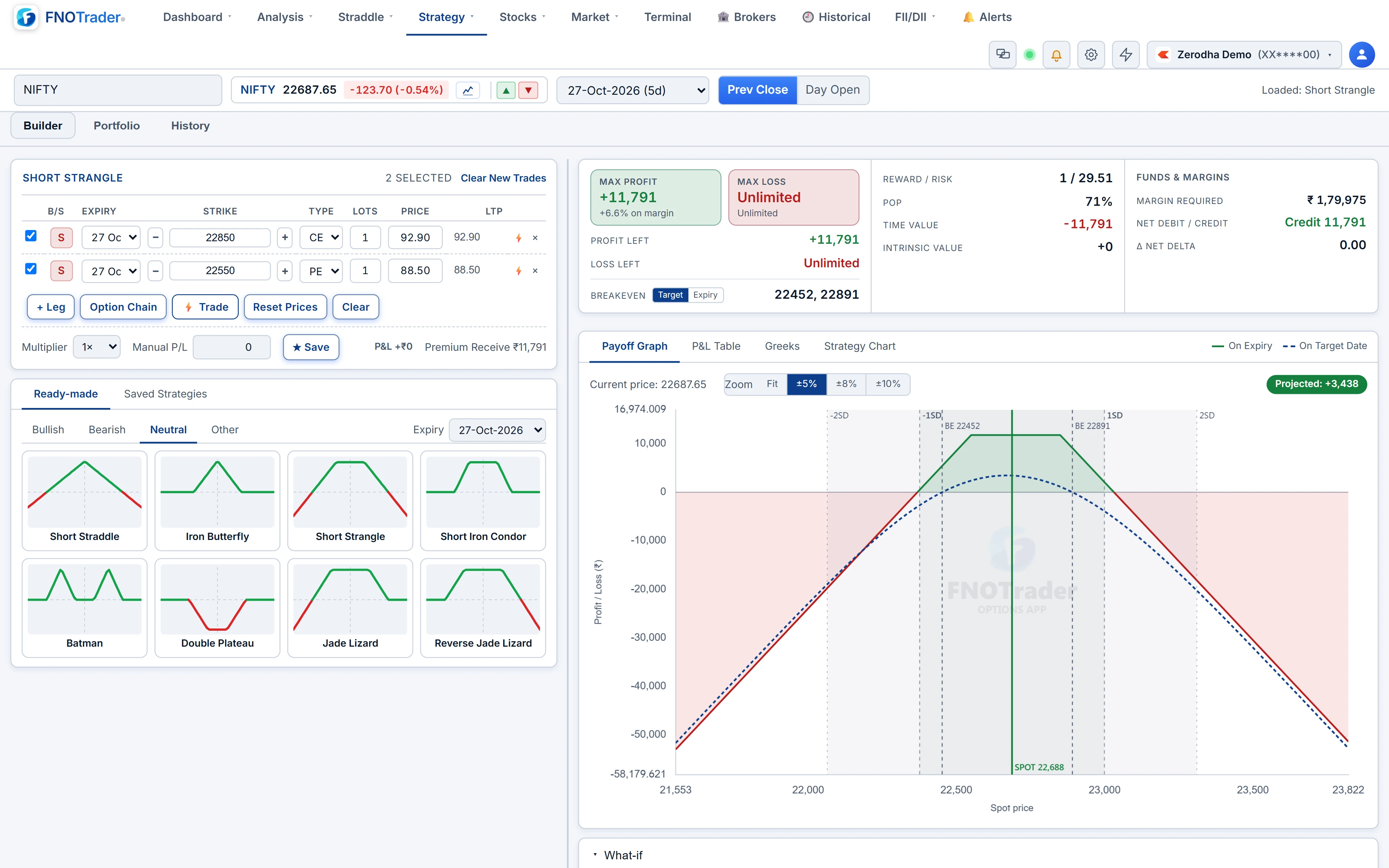
- Model the structure before you trade it. The Option Strategy Builder shows payoff, Greeks, probability of profit and margin for a structure. Its what-if row re-prices it for an IV spike or a later date.
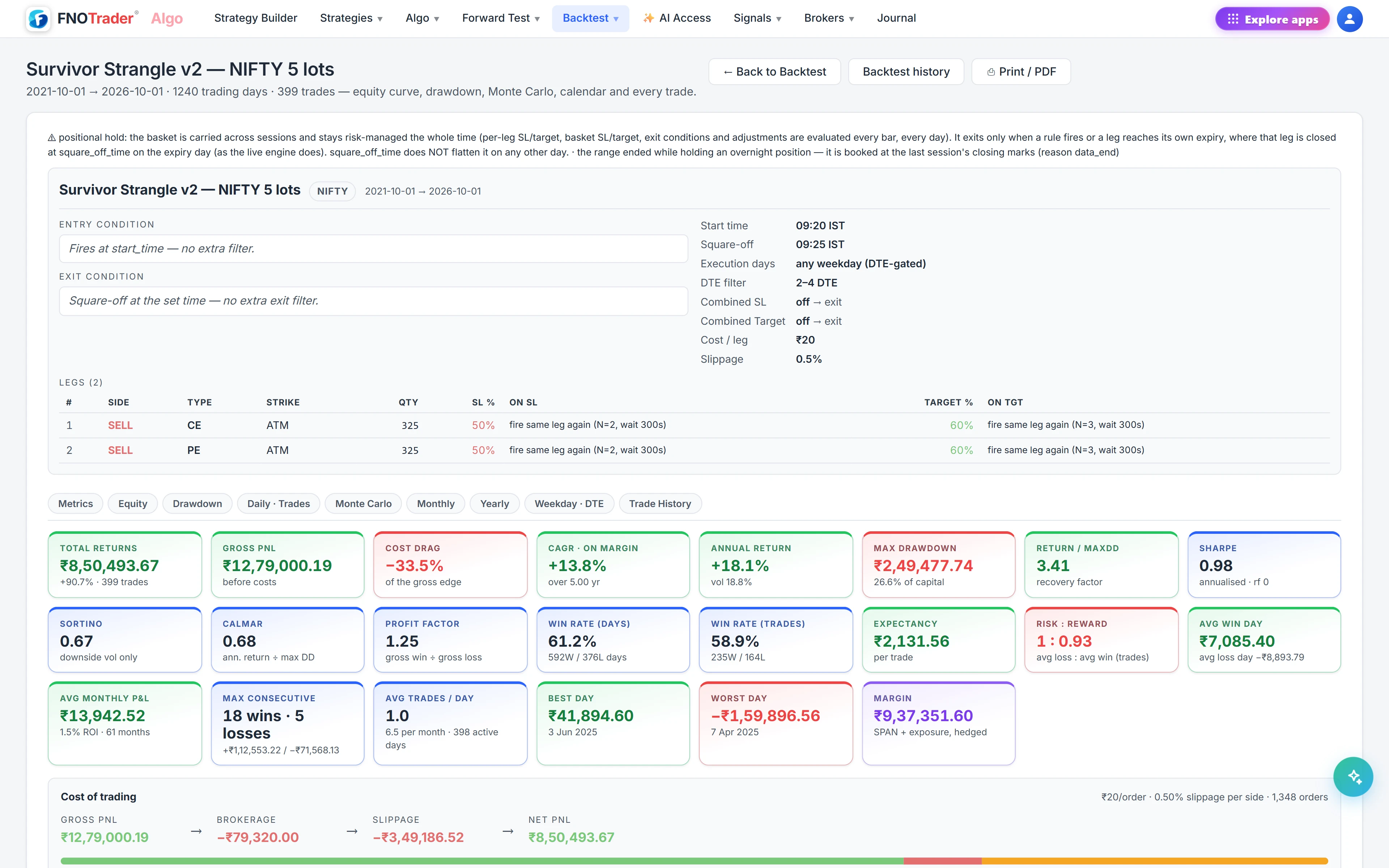
- Backtest both sides of the same idea over years of data with costs and slippage, then compare maximum drawdown and the worst day, not only total P&L. See reading a backtest report.
- Put a hard daily loss limit on any short-premium strategy before it goes live. See daily loss kill switch.
Try it in Options Analytics
Compare payoff, Greeks, probability of profit and margin for a bought and a sold structure in the Options Analytics Strategy Builder, then test both on years of data in Algo & Backtest.
Educational content. Not a recommendation to buy or sell any security. Options trading involves substantial risk of loss. Source: SEBI study on profit and loss of individual traders in equity derivatives, FY25 (July 2025).
Common questions
Is option selling better than option buying?
Not in general. Selling wins more often but has larger, rarer losses and needs more margin. Buying has capped losses but needs a big, fast move. Which suits you depends on capital, risk tolerance and the specific rule, tested on data.
Why is option selling called unlimited loss?
A naked short call has no upper limit on how far the underlying can rise, so its theoretical loss is unlimited. A naked short put can lose up to the strike minus the premium. Buying wings caps the loss.
Why does option selling need more money?
Because the exchange margins the seller for a bad-scenario loss (SPAN plus exposure margin), while the buyer's maximum loss is the premium already paid.
Do option sellers make money in India?
Some do and many do not. SEBI found about 91% of individual F&O traders made net losses in FY25. A high win rate does not mean a positive result.
What is the success rate of option buying in India?
There is no reliable published success rate split by buyers and sellers. Any figure quoted without a source should be ignored. Test your own rule instead.
More on Options App
More in Options App · App: Options Analytics · Definitions: glossary · All: every article