Static IP for API trading
Your broker account connects. It shows your positions. It streams live prices. And every single order comes back refused. Nothing is wrong with your credentials — the orders are arriving from an address your…
Read it →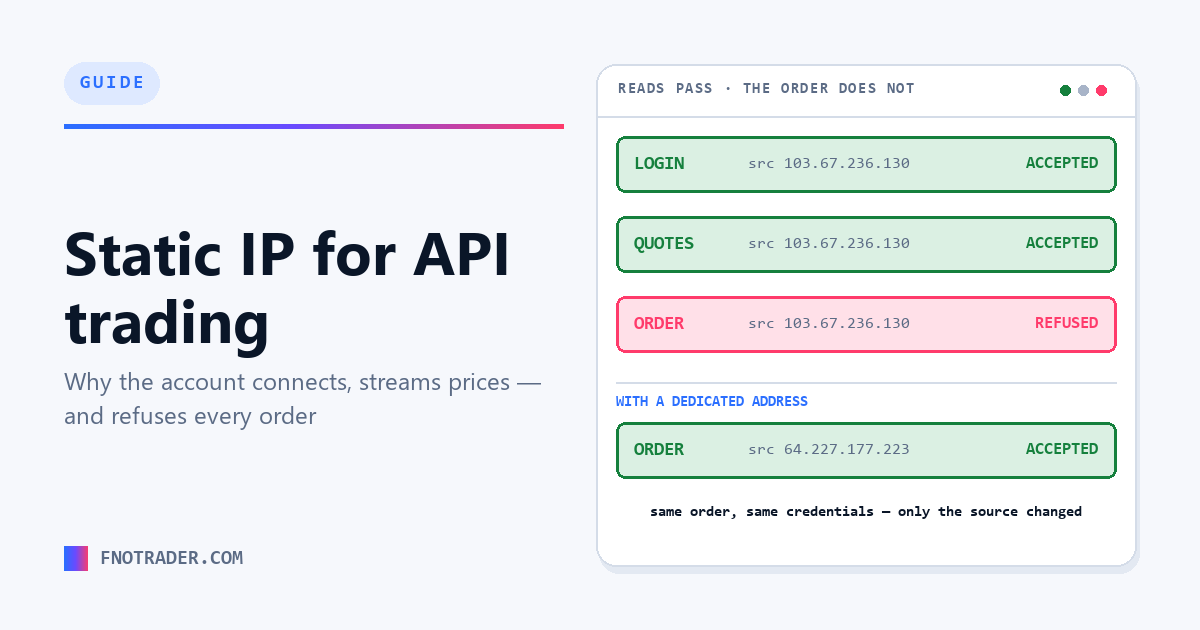
Your broker account connects. It shows your positions. It streams live prices. And every single order comes back refused. Nothing is wrong with your credentials — the orders are arriving from an address your…
Read it →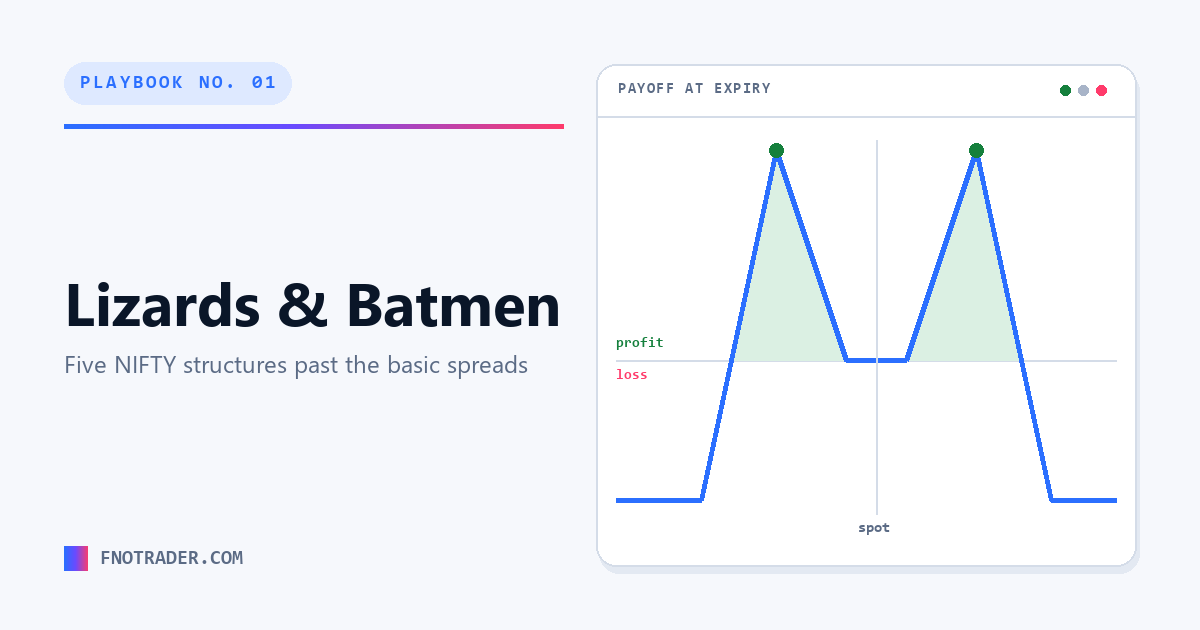
Jade lizard, big lizard, reverse jade and both Batman variants, built on the real NIFTY 25-Aug chain. Why the short strike goes beyond a level for a lizard and on it for a Batman — plus the margin fact that a defined-risk butterfly blocks 61× the amount it can lose.
Read the breakdown →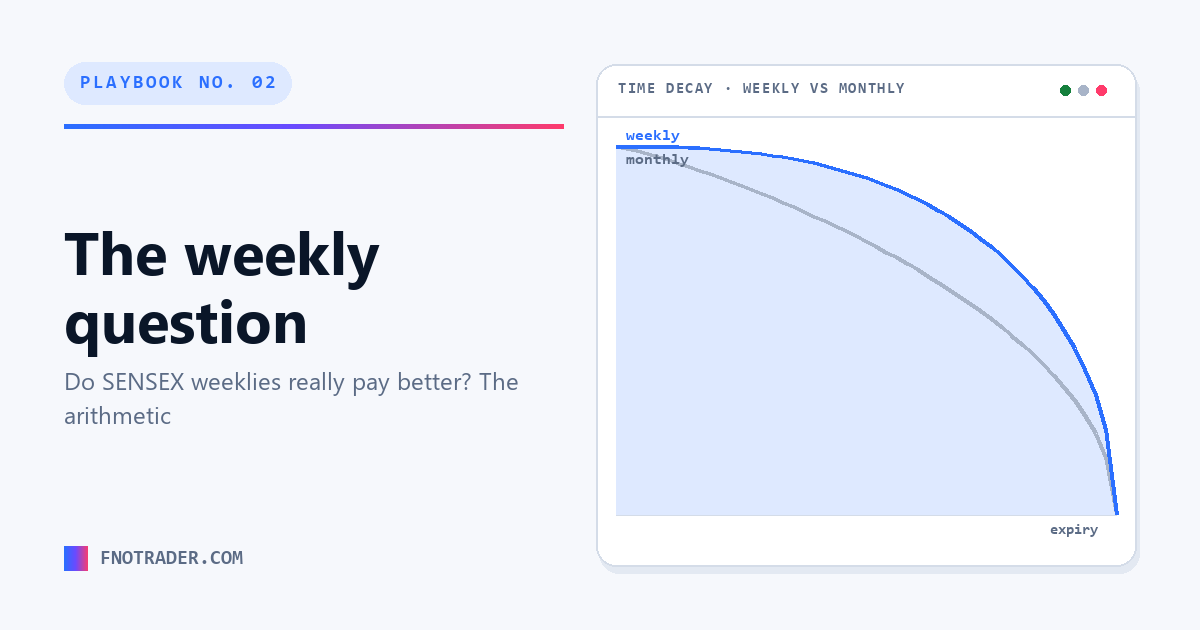
The same five structures rebuilt on SENSEX weeklies, measured per day of capital blocked against the NIFTY monthly. At-the-money premium decays with the square root of time; tail premium decays far faster — and that single asymmetry decides which expiry you should be using.
Read the breakdown →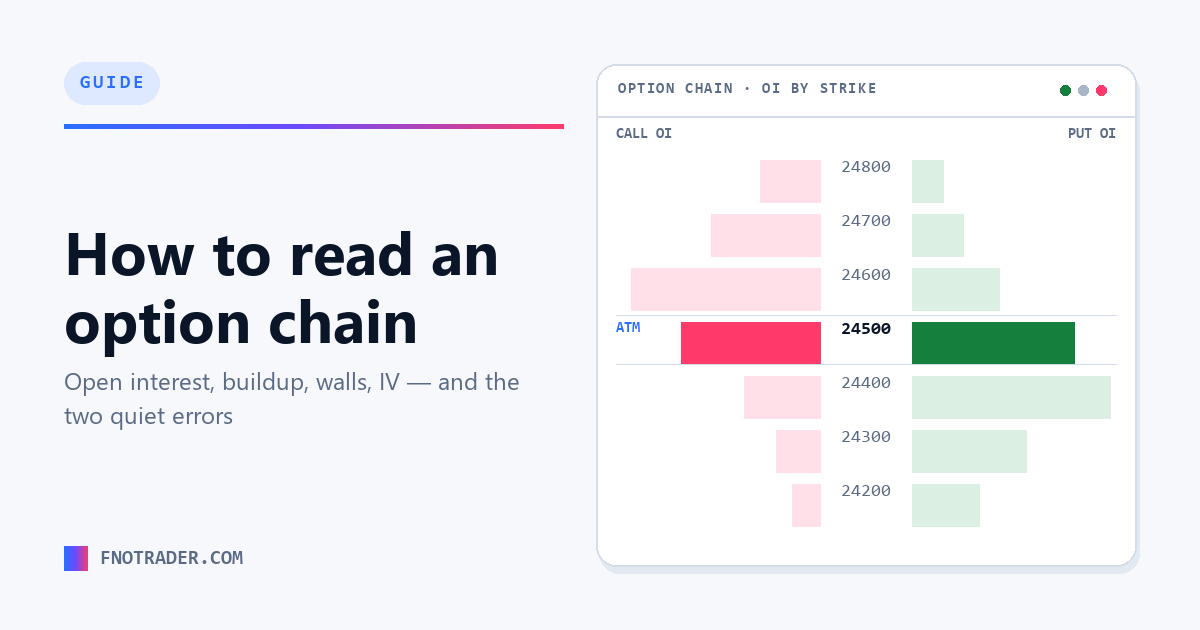
The chain is telling you everything. Most people just can't read it fast enough — and two habits, both close to universal, quietly poison the answer before they even start. Here's what every column is really saying, and how to read it at speed.
Read it →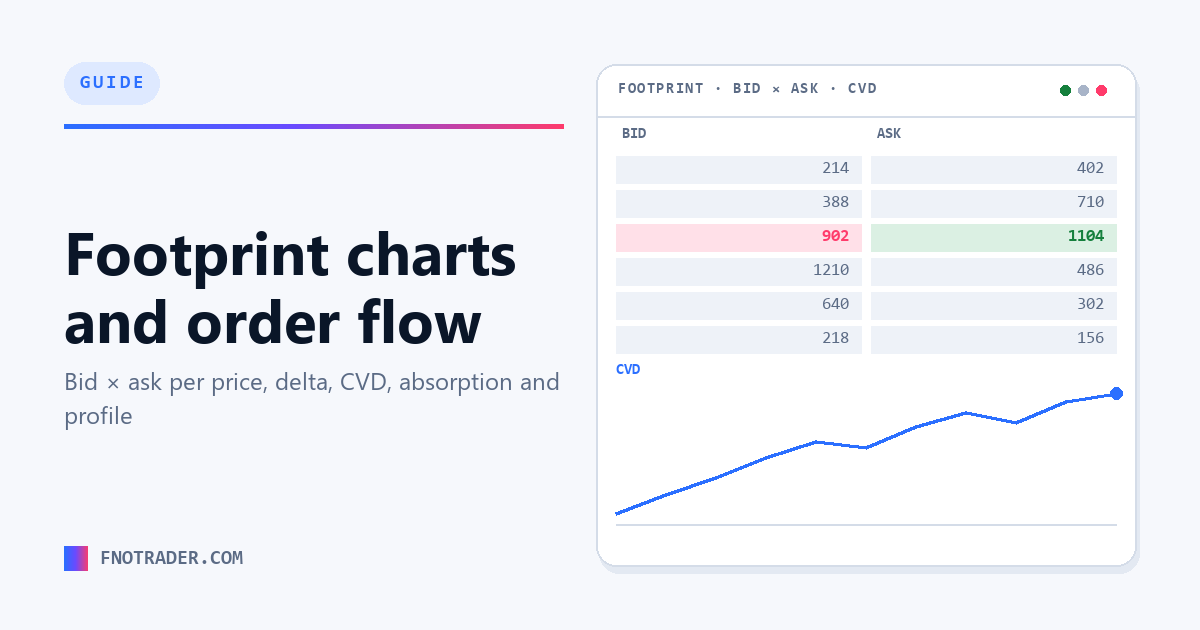
A candle tells you where price finished. It never tells you who was left buying at the top — which is exactly why the breakout you took at the close died ten minutes later. That information exists. It's inside the bar.
Read it →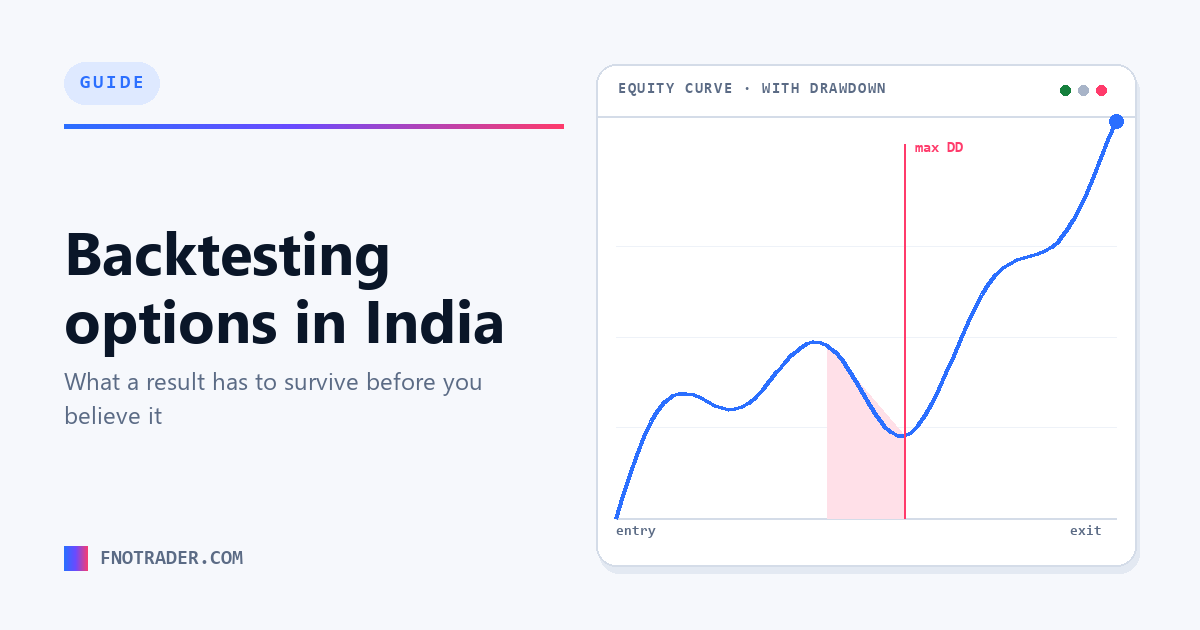
Every backtest looks good. That's what they're for. The real question is what the result had to survive before it reached you — and most of the ones you'll be shown have survived nothing at all.
Read it →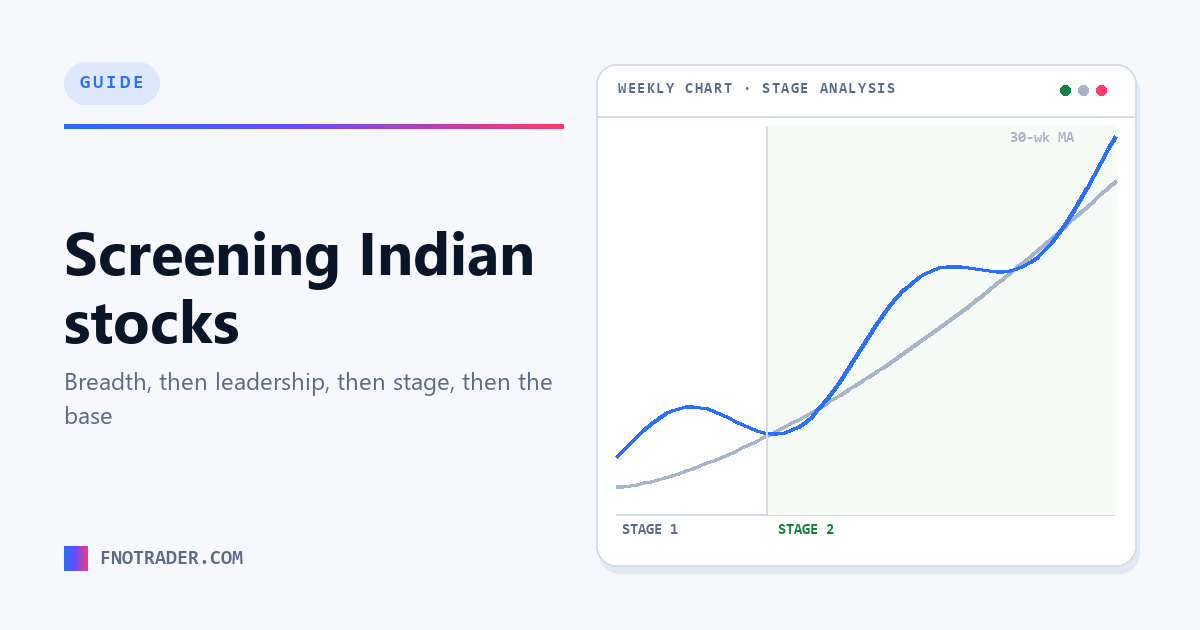
You weren't wrong about the stock. You were wrong about the tide. A screen that hands back two hundred names hasn't narrowed anything — the ones that work run in an order, and the order starts with the market, not the chart.
Read it →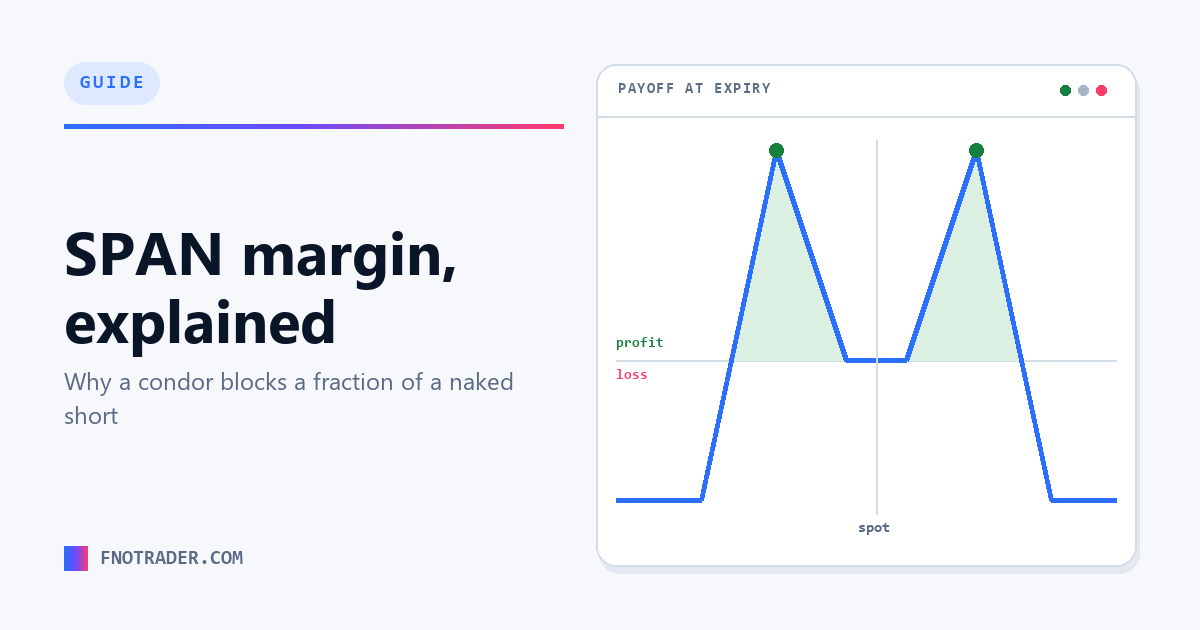
Two traders sell the same NIFTY call. One blocks ₹1.4 lakh, the other ₹28,000. Nothing about the call is different — the second one bought a wing. That gap is SPAN, and misunderstanding it is why most people compare option strategies wrong.
Read it →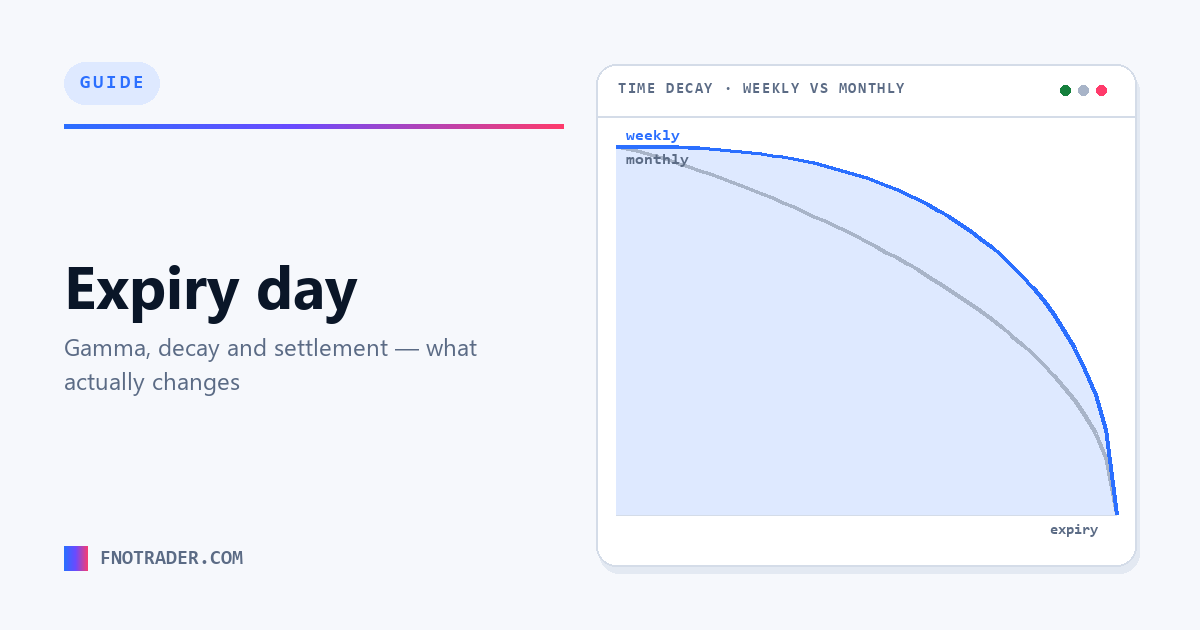
Expiry day is not the rest of the week with less time on it. The arithmetic of an option changes shape in the final hours, and strategies that behave one way for four days behave differently on the fifth.
Read it →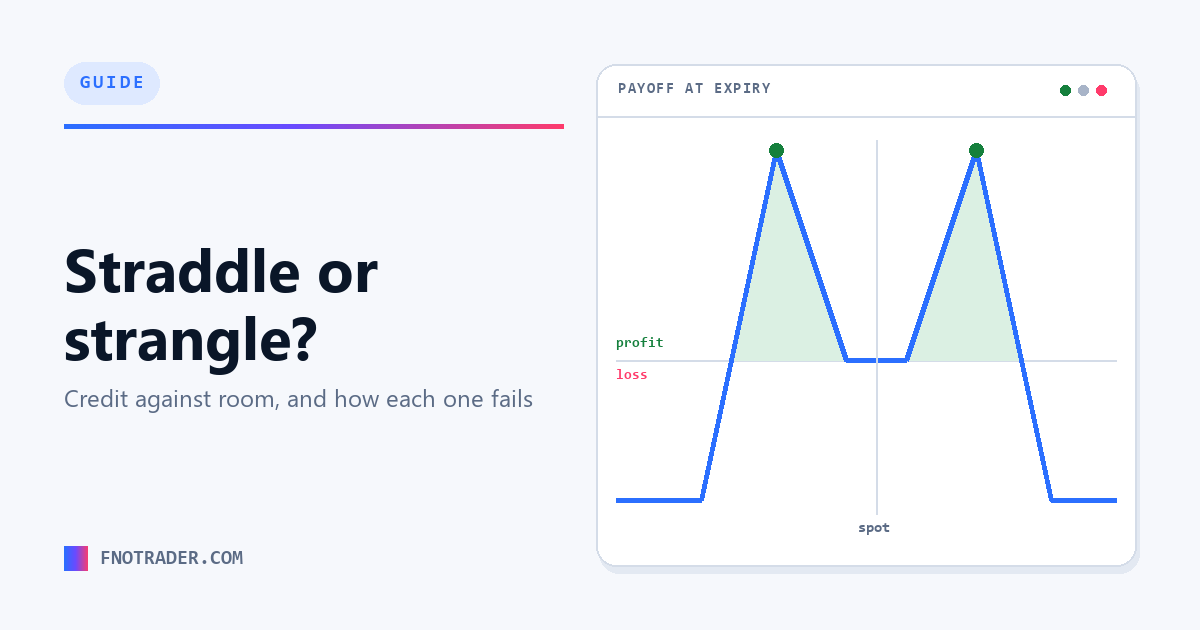
Both sell volatility. One collects more and gives you less room; the other gives you room and collects less. Choosing between them is not a preference — it is a function of where implied volatility is sitting and how long you intend to hold.
Read it →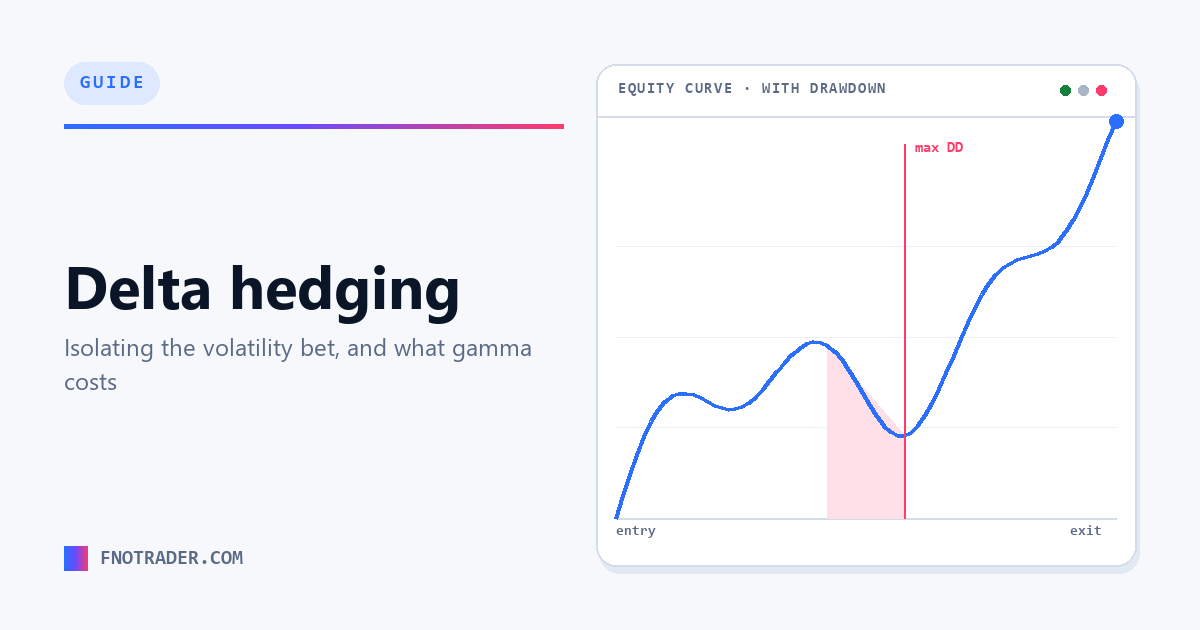
A short straddle makes money if the market stays still and loses if it trends. Delta hedging is the attempt to remove the trend risk and keep the stillness bet — and the reason it is harder than it sounds has a name: gamma.
Read it →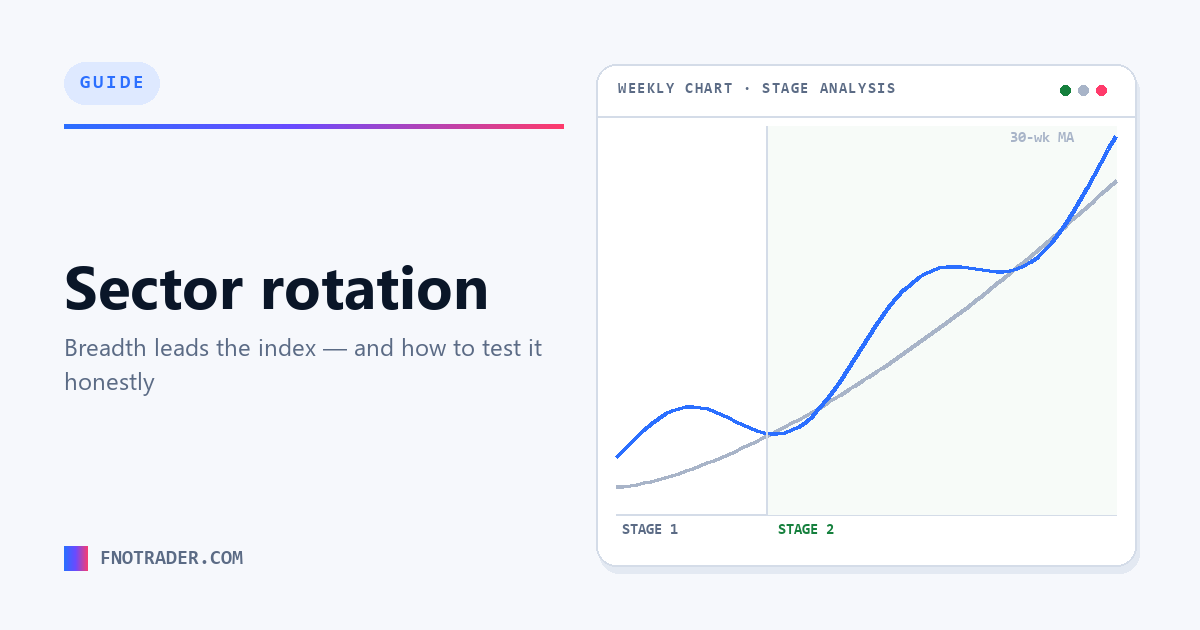
Money moves between sectors long before the index says anything. That much is observable. Whether you can systematically be early is a separate question — and most attempts to answer it are answered wrong before the first trade is simulated.
Read it →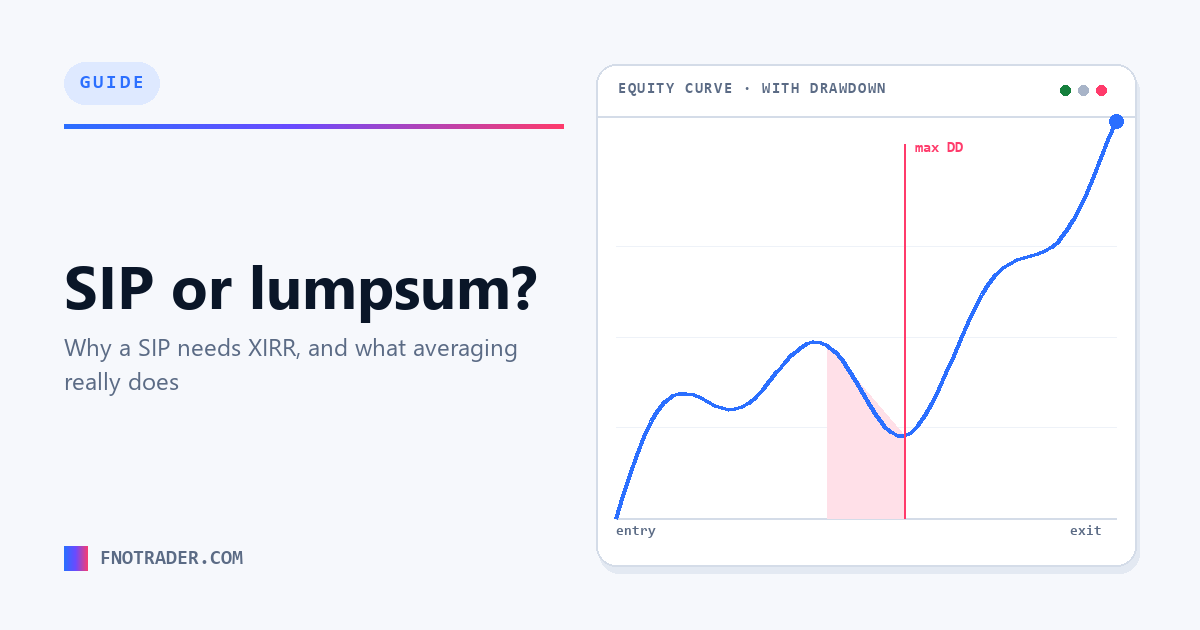
The honest answer is that lumpsum usually wins on paper and SIP usually wins in practice, and the reason has less to do with returns than with the fact that most people do not have a lumpsum — and those who do rarely deploy it at the right moment.
Read it →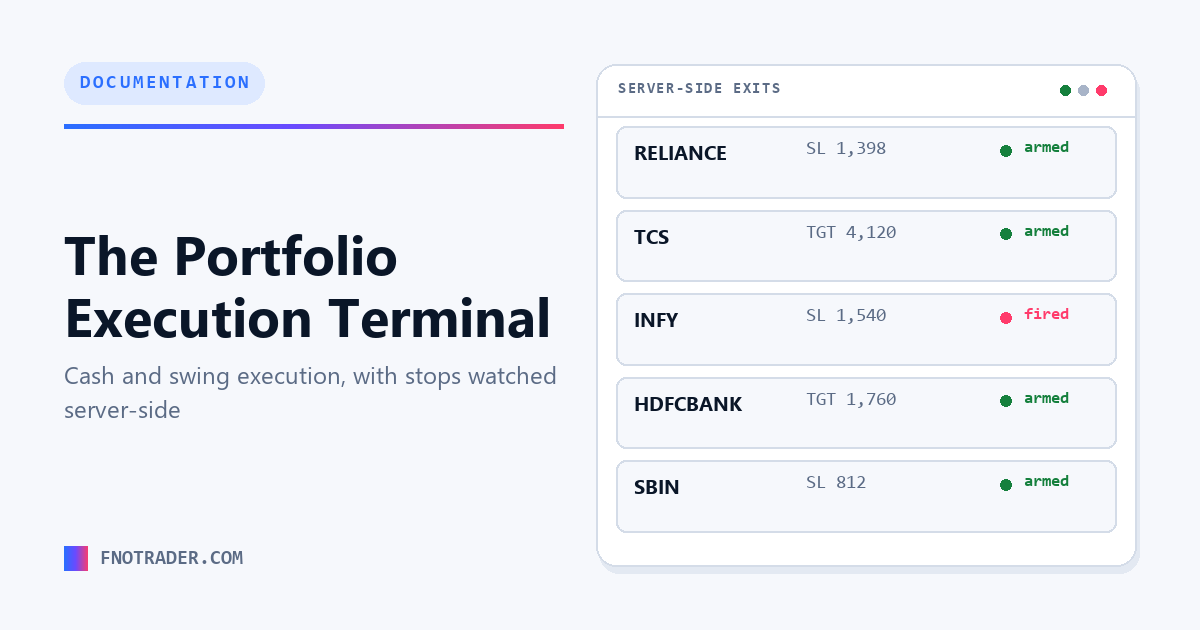
Mid-lunch, the stomach drop: did I actually put a stop on that? Nobody blows up from a bad pick. They blow up from an unsized, unprotected one. This is the terminal built around that problem — and what each part of it is for.
Read it →The help documentation for each app — what every screen does, how the numbers are calculated and where the settings live. The structures in the articles above are built in these: the chain and payoff in Options, the levels in Footprint, the backtests in Algo.
Every guide above opens without a login. The two marked otherwise do not have a standalone help page yet — those links go to the product overview instead. Pricing for every app lives under Pricing.