Why doesn't the option move point-for-point with NIFTY?
Delta is how much the premium moves for a one-point move in the underlying. An at-the-money option has a delta near 0.5. An out-of-the-money option might be 0.2 or less. A 100-point NIFTY rally therefore adds only about 20 points to a 0.2-delta call, before anything else is counted.
Deep in-the-money options have deltas close to 1 and track the index closely, but they cost much more. Cheap OTM options are cheap because they pass on only a small part of the move.
What is theta decay?
Theta is the premium an option loses per day from the passage of time alone, with everything else unchanged. It is not linear. At-the-money time value decays roughly with the square root of the time left, so the last few days before expiry take away far more than the early weeks. With NIFTY weeklies, buyers are almost always close to the steep part of that curve. More on this in expiry day options in India.
Why does IV fall when the market rises?
Index option IV usually falls during steady rallies and rises in sell-offs, because fear is priced into puts and the overall level of IV more than greed is. India VIX, which is built from NIFTY option prices, often eases in a slow grind higher. When IV drops, every long option loses roughly vega × the IV drop. Before a scheduled event the effect can be sudden. See IV crush.
A worked example
Hypothetical numbers for illustration. NIFTY is at 24,000. You buy the 24,200 CE for ₹60, with three days to expiry: delta 0.30, theta −₹9 a day, vega ₹5 per IV point.
The next day NIFTY closes 60 points higher, and ATM IV eases by 1 point.
| Force | Effect on premium |
|---|---|
| Delta: 0.30 × 60 points | +₹18 |
| Theta: one day | −₹9 |
| Vega: −1 IV point × ₹5 | −₹5 |
| Net | +₹4 |
A 60-point move in your favour earned ₹4. If NIFTY had risen only 40 points, the net would be −₹2: right on direction, and still a loss.
How do I check which force is eating my premium?
Look at the position's Greeks in rupees, not only its P&L. In FNOTrader's Option Strategy Builder:
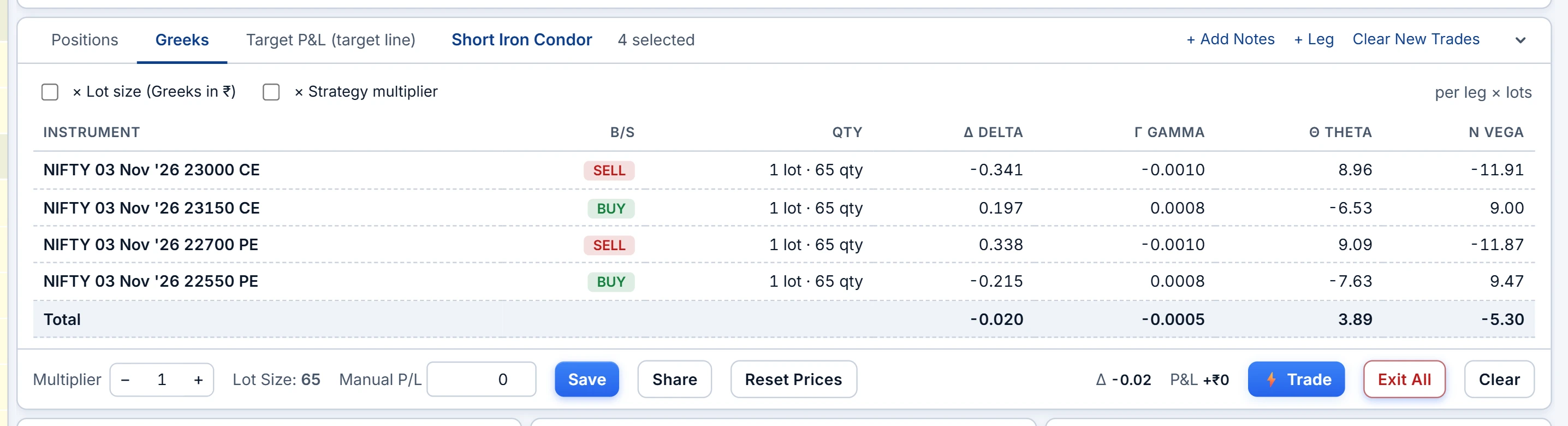
- The Greeks tab shows delta, gamma, theta and vega per leg and in total. Tick × Lot size to see them in rupees.
- The Greeks card shows the daily decay in ₹ (theta × quantity). That is the amount the market has to move in your favour each day just to break even.
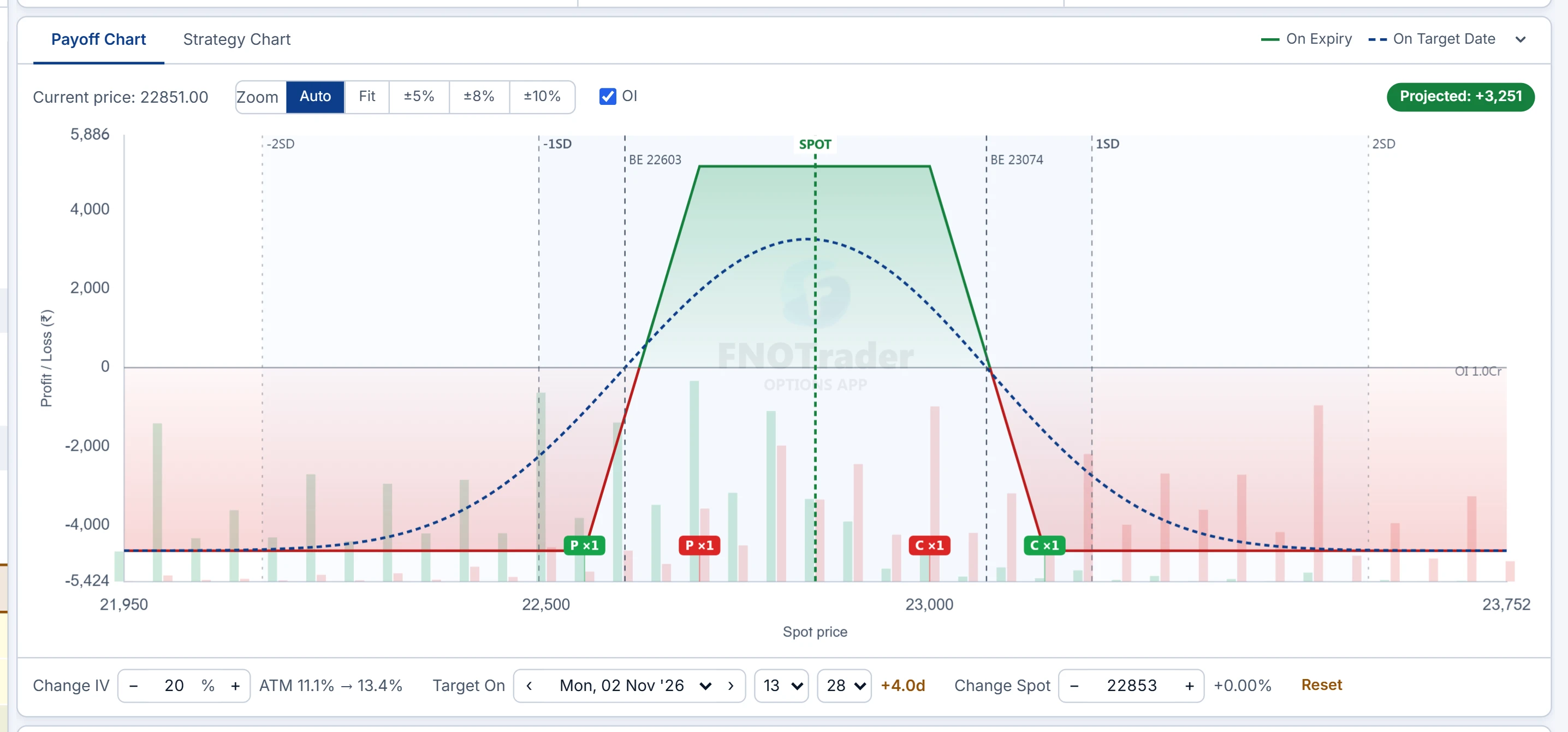
- Target On moves the valuation date day by day, so you can watch theta reshape the payoff before you trade.
- Change IV re-prices the position at a lower or higher IV.
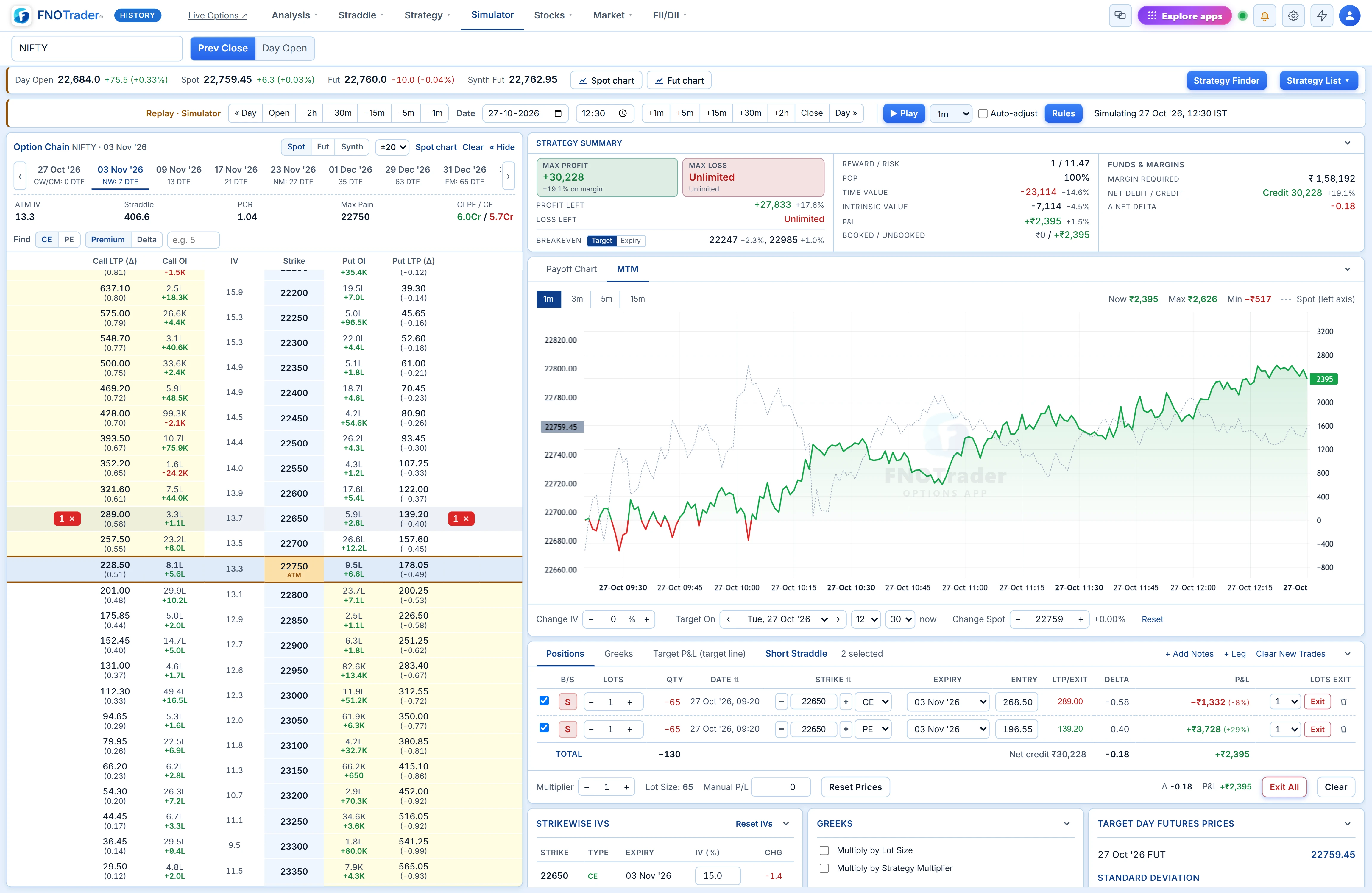
To build intuition without risking money, the Options Simulator replays past NIFTY sessions minute by minute, so you can watch a strike's premium respond to the index, time and IV together.
Try it in Options Analytics
Check delta, theta and vega in rupees for any position in the Strategy Builder, and replay past sessions in the Options Simulator, both in Options Analytics.
Educational content. Not a recommendation to buy or sell any security. Options trading involves substantial risk of loss.
Common questions
Why does my option premium decrease even when the market goes up?
Because the gain from delta was smaller than the combined loss from theta (time decay) and any fall in implied volatility. OTM options and options close to expiry are the most exposed.
What is theta decay in options?
The daily loss of an option's time value as expiry approaches, all else equal. It speeds up sharply in the final days for at-the-money options.
Can option buyers make money in India?
Some do, but most individual F&O traders lose money. SEBI's study of FY25 found about 91% of individual traders in equity derivatives made net losses. A buyer needs the move to be large enough, and soon enough, to beat theta and any fall in IV.
Which options lose value fastest?
In rupees, at-the-money options in the final days before expiry. In percentage terms, far OTM options, whose small remaining premium can go to near zero quickly.
Does buying a far expiry avoid theta?
It reduces the daily decay per rupee of premium, but the option costs more and has more vega, so changes in IV matter more.
More on Options App
More in Options App · App: Options Analytics · Definitions: glossary · All: every article